Hide & Seek: Prop Hunting Game

100K+
Installs
Barracuda Games - Good Shooting and Action Games
Developer
-
Simulation
Category
-
Everyone
Content Rating
-
https://barracudafishgames.blogspot.com/2021/12/privacy-policy.html
Privacy Policy
editor reviews
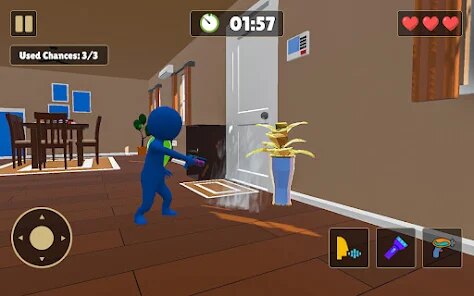
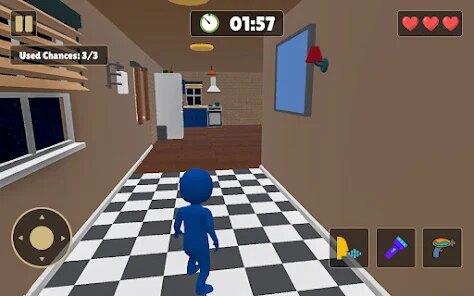
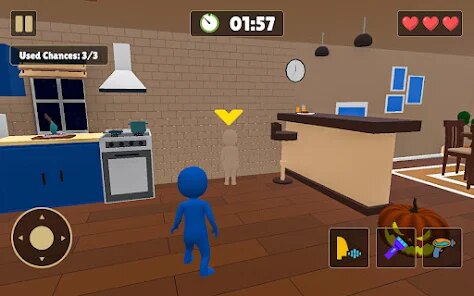
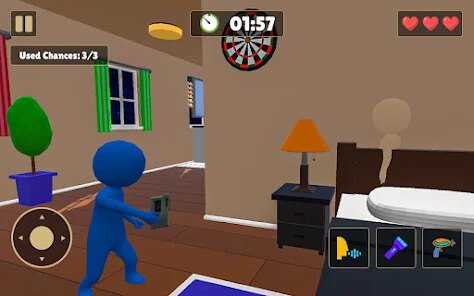
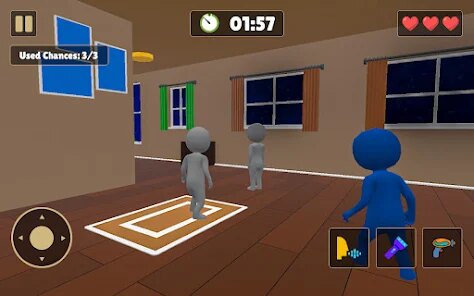
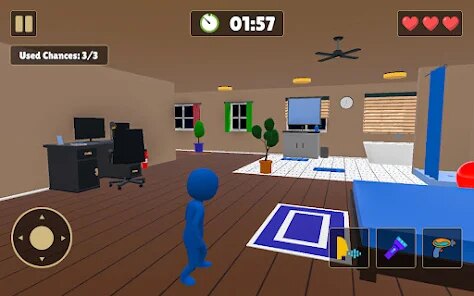
Step into the chaotic world of Hide & Seek: Prop Hunting Game, a multiplayer hide-and-seek shooter developed by Barracuda Games that blends stealth, strategy, and fast-paced gunplay into a single adrenaline-fueled package. At its core, the game tasks a team of "Seekers" with hunting down disguised "Props" — players who can transform into everyday objects like barrels, boxes, or traffic cones to blend into the environment. The Seekers have a limited time and a set amount of ammunition to find and eliminate all Props, while the Props must survive by staying hidden, moving cleverly, and occasionally making risky dashes to new spots. It's a genre hybrid that mixes elements of social deduction games like Among Us with the twitch reflexes of arena shooters, making it appealing to fans of both casual party games and competitive PvP communities. What first caught my eye was the absurdist humor — watching a fire hydrant waddle across a parking lot while being chased by a player wielding a shotgun is the kind of silly premise I couldn't resist. The game's vibrant, low-poly art style and quick match times (around 3–5 minutes per round) also promised a pick-up-and-play experience that seemed perfect for quick sessions with friends or solo queue chaos.
Diving in, my first few matches were a mix of confusion and pure laughter. Hiding as a small crate in a warehouse, I realized the AI-controlled "clone" objects scattered around the map actually moved slightly, so staying perfectly still was a death sentence — you had to mimic their subtle sway and rotation to fool sharp-eyed Seekers. The controls felt responsive from the start, with smooth mouse-and-keyboard input for aiming and a satisfying weight to the shotgun's kick. Learning curve was gentle; the tutorial is minimal but sufficient, and within three rounds I understood the rhythm of listening for audio cues (like a prop's creak when moving) and using the radar ping ability to narrow down hiding spots. One standout moment came when I was the last Prop alive on a construction site map, with 30 seconds left and two Seekers closing in. I transformed into a small orange traffic cone, wedged myself behind a forklift tire, and held my breath as one Seeker ran right past me — only for his teammate to randomly shoot the tire, revealing me. The panic of that split-second decision to either book it or stay was thrilling, and the ensuing chase across scaffolding ended with me leaping off a ledge and transforming mid-air into a floating balloon to escape. That level of emergent storytelling kept me coming back.
As someone who has played dozens of multiplayer shooters and social deduction games, what really locked me into Hide & Seek was how it rewards both brainless fun and smart play. Unlike games like Dead by Daylight, where survivors feel helpless against a powerful killer, here Props have genuine tools to fight back — from deploying smoke bombs to temporarily stunning Seekers with a "taunt" ability. The Seekers, meanwhile, aren't just mindless hunters; learning to read map layouts and anticipate Prop movements becomes a chess match after a few rounds. The netcode held up well in my experience, with minimal lag even in full 8-player lobbies, and the lack of a pay-to-win monetization model was refreshing — all cosmetic skins and emotes can be earned through gameplay or bought for small fees, with no impact on stats. What it does better than most in its genre is balancing tension with absurdity; one moment you're sweating over a strategic reposition, the next you see a fridge moonwalk across the screen. That tonal blend keeps even losses feeling entertaining, and the 4v4 or 6v2 format ensures no one is ever truly out of the action. For casual players, it's a hilarious party game. For competitive types, there's real depth in map memorization and prop psychology.
features
- Prop Transformation System 🎭: Players can instantly morph into a variety of objects — from rocks to traffic barriers to office chairs — each with unique hitboxes and movement speeds. The system encourages quick thinking under pressure, as you can switch forms mid-chase to better blend into different environments, like turning from a barrel into a small flower pot when diving into a garden area.
- Radar Ping Ability 📡: Seekers have a limited-use radar that emits a brief pulse, revealing nearby Props as glowing outlines for a few seconds. Props can counter this by standing still (reducing detection range) or using a "silent move" ability that temporarily masks their footsteps and radar signature, adding a layer of cat-and-mouse strategy.
- Environmental Cloning 🏭: Each map is populated with AI-controlled "decoys" that move and behave identically to real Props, forcing Seekers to rely on observation and deduction rather than just shooting everything. Mislabels of decoys waste ammunition and time, making smart hunters prioritize visual discrepancies, like a trash can that jitters vs. a perfectly still one.
- Map-Specific Events 🎡: Some maps feature dynamic hazards or events, such as a sudden rainstorm on the city map that reduces visibility or a factory conveyor belt that periodically pushes objects around. These force both teams to adapt on the fly, turning planned strategies into chaotic improvisation.
pros
- Perfectly Balanced Absurdity 🤡: The game nails a tone where losing is just as fun as winning. Watching a Seeker unload a full shotgun magazine into a cactus that turns out to be a decoy, while the real Prop sneaks away cackling, creates moments of pure joy that keep me queuing up for one more round even after a frustrating loss.
- Accessible for All Skill Levels 🎮: Whether you're a shooter veteran or a total newcomer, the core loop is easy to grasp. Props can survive by simply staying still in obvious spots, while Seekers can brute-force win by shooting everything. But the skill ceiling lies in advanced tactics, like using audio cues from footsteps or learning map-specific hiding patterns, giving dedicated players depth without alienating casuals.
- Short Match Times ⏱️: With rounds averaging 3 minutes, the game respects your time. This makes it ideal for quick sessions during a lunch break or as a palate cleanser between longer gaming sessions. The fast pace also means you never feel stuck in a losing match — a fresh start is always seconds away.
- No Pay-to-Win Elements 💰: All gameplay-affecting content is unlocked through leveling up, and the only purchasable items are purely cosmetic skins and emotes. This creates a fair playing field where a new player with stock skins can outplay a veteran simply through better strategy, which is rare in modern free-to-play shooters.
cons
- Limited Map Variety at Launch 🗺️: The initial selection of five maps starts to feel repetitive after about 10 hours of play. While the environmental events add some variation, the core layouts become predictable, and I found myself wishing for more distinct themes — like a dense jungle or a multi-story office building — to break the monotony.
- Slow Prop Movement in Certain Forms 🐢: Some larger prop models (like dumpsters or vending machines) move painfully slow, making them nearly unusable in maps with open areas. This forces Props into a narrow meta of using only small, fast objects, which reduces the creative variety that the transformation system promises.
- Audio Clues Can Be Inconsistent 🔊: While the sound design is generally good, there are moments where a Prop walking on grass makes no audible footstep, while a decoy crate creaks loudly for no reason. This inconsistency sometimes muddles the deduction gameplay, making sound-dependent strategies feel less reliable than visual scanning.
- No Dedicated Party System 👥: Joining a game with friends currently relies on an invite code system that can be clunky — it sometimes fails to connect players or puts them on opposing teams despite being in the same party. A proper lobby system with team balancing would greatly improve the social experience, especially for groups of 4+.
Articles
![]()
How to Get Robux Safely Without Scams
![]()
How to Download Older Versions of Android Apps
![]()
How to Download Games on Google Play for the First Time
![]()
What Is an APK File for Android? Everything You Need to Know
![]()
Do Free Robux Generators Work?
![]()
Robux Pricing Guide (2026 Update): How Much Robux Really Costs
![]()
How to Avoid Scams in Roblox
![]()
Rarest Pets in Adopt Me! (2026 Update)
![]()
How to Trade Safely in Adopt Me! (So You Don't Lose Everything)
![]()
Secret Tricks Nobody Tells You in 'Steal a Brainrot'
![]()
Beginner Guide: Don't Lose Your Brainrot
![]()
How to Steal in 'Steal a Brainrot' Without Getting Caught (Or at Least Not Instantly)
![]()
Is Brookhaven RP Worth Playing? It Depends on What You’re Looking For
![]()
Why Blox Fruits Is So Popular? Here’s Why Everyone Keeps Playing It
![]()
Best Roblox Obby Games for Beginners (2026): Learn the Game Without Hitting a Wall
![]()
Top 10 Roblox Horror Games (2026): The Scariest Experiences You Can't Miss












Hot Apps
-
![]()
Zoom - One Platform to Connect
zoom.us4.1
-
![]()
Google Maps
Google LLC4.2 -
![]()
WhatsApp Messenger
WhatsApp LLC4.2 -
![]()
DoorDash - Food Delivery
DoorDash4.6
-
![]()
Google Chat
Google LLC4.4 -
![]()
Wise: International Transfers
Wise Payments Ltd.4.7 -
![]()
Grok
xAI4.9 -
![]()
Telegram
Telegram FZ-LLC4.2 -
![]()
Microsoft Teams
Microsoft Corporation4.6 -
![]()
letgo: Buy & Sell Used Stuff
letgo3.3 -
![]()
Afterpay - Buy Now Pay Later
Afterpay3.8 -
![]()
PayByPhone
PayByPhone Technologies Inc .4.9 -
![]()
PayPal - Send, Shop, Manage
PayPal Mobile4.3 -
![]()
GroupMe
GroupMe4.5 -
![]()
Domino's Pizza USA
Domino's Pizza LLC4.7 -
![]()
Google Chrome: Fast & Secure
Google LLC4.1 -
![]()
ChatBot - AI Chat
X PhotoKit4.5 -
![]()
DeepSeek - AI Assistant
DeepSeek4.2 -
![]()
Snapchat
Snap Inc4.1 -
![]()
YouTube
Google LLC4.1 -
![]()
Klarna | Shop now. Pay later.
Klarna Bank AB (publ)4.3 -
![]()
Passport Parking
Passport Labs, Inc.2.5 -
![]()
Spotify: Music and Podcasts
Spotify AB4.3 -
![]()
Netflix
Netflix, Inc.3.9 -
![]()
Uber Eats: Food Delivery
Uber Technologies, Inc.4.3 -
![]()
Perplexity - Ask Anything
PerplexityAI4.7 -
![]()
Snapmint: Buy Now, Pay in EMIs
Snapmint4.5 -
![]()
Chai: Chat AI Platform
Chai Research Corp.4.4 -
![]()
Venmo
PayPal, Inc.4.2 -
![]()
TikTok
TikTok Pte. Ltd.4.4






























Disclaimer
1.Appinfocenter does not represent any developer, nor is it the developer of any App or game.
2.Appinfocenter provide custom reviews of Apps written by our own reviewers, and detailed information of these Apps, such as developer contacts, ratings and screenshots.
3. All trademarks, registered trademarks, brand names and company names or logos appearing on the site are the property of their respective owners.
4.Appinfocenter abides by the federal Digital Millennium Copyright Act (DMCA) by responding to notices of alleged infringement that complies with the DMCA and other applicable laws.
5.If you are the owner or copyright representative and want to delete your information, please contact us [email protected].
6.All the information on this website is strictly observed all the terms and conditions of Google Ads Advertising policies and Google Unwanted Software policy.
7.Appinfocenter.com is an independent, information-only website which is 100% free to all the users.