Keyboard Escape: Speed Parkour

1M+
Installs
H2T GLOBAL PTE. LTD.
Developer
-
Aciton
Category
-
Everyone
Content Rating
-
https://h2tstudio.com/privacy-policy/
Privacy Policy
editor reviews
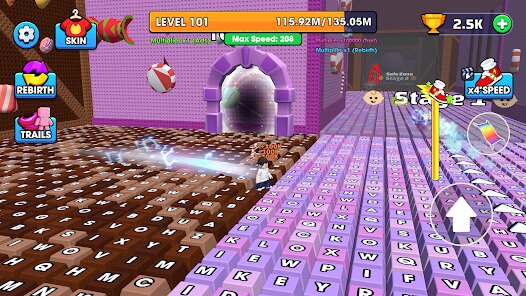
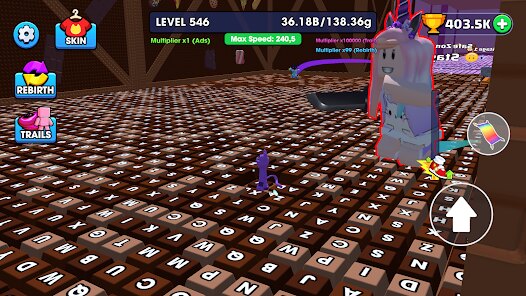
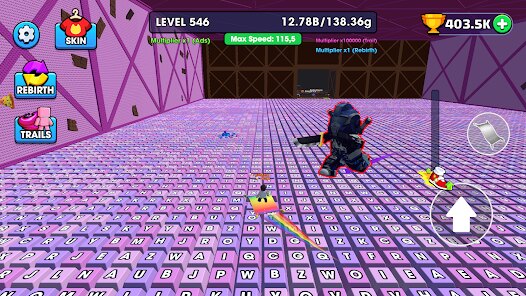
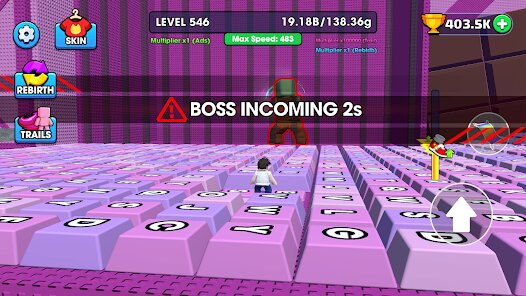
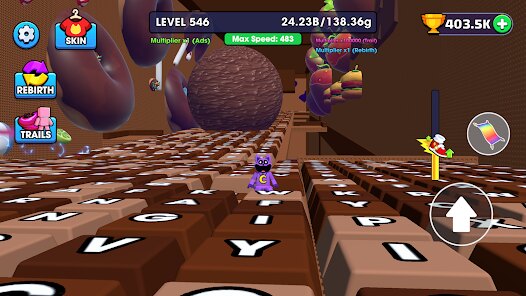
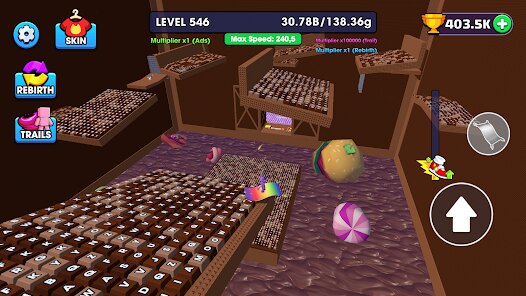
Keyboard Escape: Speed Parkour is a fast-paced, first-person parkour game that drops you into a neon-soaked, abstract world where the only goal is to run, jump, slide, and wall-run your way to the finish line as quickly as possible. It belongs to the speedrunning subgenre of platformers, but with a heavy emphasis on precision timing and muscle memory rather than puzzle-solving or exploration. The core loop is deceptively simple: you spawn at a start line, and you need to reach the end of each level while dodging obstacles, chaining movement techniques, and shaving milliseconds off your best time. If you're a fan of games like Mirror's Edge, Clustertruck, or even Super Meat Boy's pure precision platforming, this will feel like home. Casual gamers might find it initially daunting, but the steep learning curve is part of the charm — it rewards grit and practice more than raw reflexes. What caught my attention was the trailer's absurdly smooth wall-run sequences and the promise of a global leaderboard system. I thought, "Okay, let's see if the actual game feels as slick as the edit."
My first hour was a mix of frustration and exhilaration. The controls are tight, but not forgiving — every mistimed jump sends you tumbling into a glowing abyss, which is both hilarious and maddening. The tutorial does a decent job of teaching the basics (slide-jump, wall-run, and air-dash), but it doesn't prepare you for the brutal chokepoints in later levels. I nearly quit at Stage 3, where a series of spinning lasers demand frame-perfect slides. But then it clicked. I found a rhythm, and the game transformed from a punishment simulator into a meditative flow state. The performance is rock-solid on my mid-range PC, with no frame drops even during the most chaotic sequences. The minimalist UI is a blessing — no cluttered minimap or quest markers, just a clean timer and a checkpoint count. One moment that stood out was a level where you have to chain five wall-runs across a gap with zero visible floor beneath you; the camera tilts slightly with each jump, and for a split second, you feel like you're flying. That sense of vertigo is something I've rarely felt in other platformers. A tip: turn on the "ghost run" mode early and race against your previous attempts. It doesn't just show your path — it forces you to analyze every wasted step, and that's where the real improvement happens.
I kept coming back because this game respects your time and your skills. Unlike many modern titles that pad playtime with filler collectibles or grinding for gear, Keyboard Escape is pure, distilled challenge. There are no loot boxes, no energy systems, no pay-to-win shortcuts — just you, the keyboard, and the course. That honesty is rare. I've played a ton of indie parkour games, and most feel floaty or imprecise, like the physics are fighting you. Here, the movement is almost mathematical in its consistency. Once you understand the mechanics, you can execute any combo with reliability, which is the exact feeling that makes speedrunners obsessive. It also has a surprisingly active community — the daily challenge mode rotates in user-created levels, and the top runs are genuinely inspiring to watch. The downside is that it's brutally hard for newcomers, and some levels feel designed for only the top 1% of players. But if you're the type who enjoys mastering a skill over weeks, not hours, this game is a hidden gem. It might not have the narrative depth of a AAA title, but as a pure mechanical playground, it's unmatched.
features
- Movement Mechanics 🏃: The game uses a momentum-based physics system where your speed carries across jumps and wall-runs. Holding the slide button before a jump lets you compress the distance, and timing the air-dash right after a wall-run gives you a huge burst of speed. There's a subtle "coyote time" window that makes the controls feel forgiving, but the game punishes over-input. Every button press matters, so you'll need to learn to release keys quickly to avoid overshooting edges.
- Level Design 🧩: Each stage is a short, self-contained course that introduces one new mechanic at a time — like a moving platform, a gravity flip, or a timed gate. The layouts are spiral-like, meaning you often loop back over your own path, which creates a nice sense of verticality. There are also hidden "shortcut" routes that cut time by milliseconds, but they usually require a risky move, like jumping off a wall into a blind chasm. Finding these is half the fun, and the game rewards exploration without ever forcing it.
- Leaderboards & Replays 📊: The game tracks your best time per level and syncs it to a global leaderboard. But the killer feature is the "spectator mode" — you can watch the top 100 players' ghost runs at any time, and the replay is rendered as a translucent 3D silhouette. You can pause, rewind, and scrub through their inputs, which is both educational and humbling. It's the closest thing to having a mentor show you exactly what they did, frame by frame.
pros
- Flow State Nirvana 🎯: The best part is when everything clicks and you're chaining moves without thinking. The audio design helps here — the background music subtly ramps up in tempo as you get closer to a perfect run, and the sound of your footsteps syncs with the beat. It turns the game into a rhythm-based experience where your actions feel less like button presses and more like a dance.
- Zero Pay-to-Win 🚫: There are no microtransactions, no battle passes, and no cosmetic loot boxes that affect gameplay. The only unlockables are purely visual (like neon trail colors for your character), and you earn them by completing in-game challenges like "finish Stage 7 without sliding" or "beat a level under 30 seconds." This is a huge win for players who are tired of being nickel-and-dimed. The sense of achievement comes from your skill, not your wallet.
- Daily Community Levels 🌐: Every day, a new user-created level gets featured as the "Daily Run," and everyone races on the same exact course. The global standings reset daily, so even a mid-tier player can snag a top 100 spot if they put in the effort. This creates a fresh incentive to log in daily, and the variety is staggering — some are meme-level ridiculous, others are tightly-crafted masterpieces. It keeps the game alive long after you finish the main campaign.
cons
- Brutal Difficulty Spike 📈: Around Stage 5, the game becomes almost sadistic. The timing windows for certain jumps are so tight that you might need to watch a replay just to understand how to do it, and even then, executing it consistently takes dozens of attempts. There's no "easy mode" or assist options, so casual players will hit a wall and may just drop the game entirely. Some levels feel like they were built for professional speedrunners and nobody else.
- Lack of Narrative Context 📖: There's no story, no character, no reason for why this world exists. You're just a glowing person running through cubes. For some, this is pure and zen-like. But for others, it might feel hollow. A bit of lore, even minimal, could have added emotional stakes to the progression. As it stands, it's all mechanics and no meaning.
- No Replayability for Short Sessions ⏳: Each level takes about 30 to 60 seconds to complete on a good run, but the true replayability comes from chasing better times. That's great for completionists, but if you only have 10 minutes to play, you might not feel like you accomplished anything significant. There's no "endless run" mode or a practice arena to mess around in, so the game can feel restrictive if you're not in the mood for serious runs.
Articles
![]()
How to Get Robux Safely Without Scams
![]()
How to Download Older Versions of Android Apps
![]()
How to Download Games on Google Play for the First Time
![]()
What Is an APK File for Android? Everything You Need to Know
![]()
Do Free Robux Generators Work?
![]()
Robux Pricing Guide (2026 Update): How Much Robux Really Costs
![]()
How to Avoid Scams in Roblox
![]()
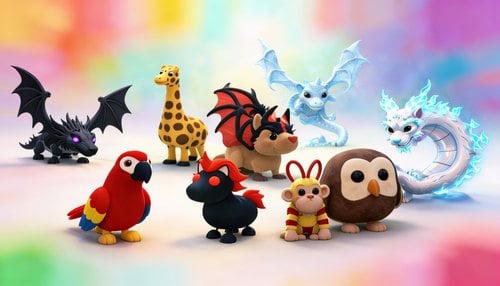
Rarest Pets in Adopt Me! (2026 Update)
![]()
How to Trade Safely in Adopt Me! (So You Don't Lose Everything)
![]()
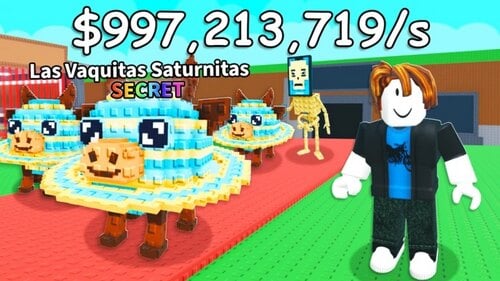
Secret Tricks Nobody Tells You in 'Steal a Brainrot'
![]()
Beginner Guide: Don't Lose Your Brainrot
![]()
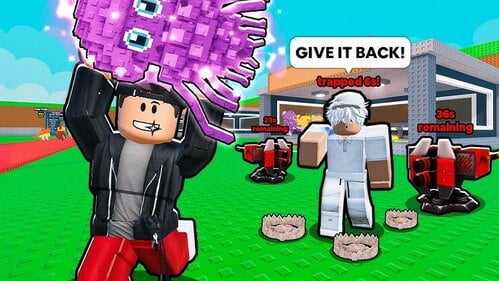
How to Steal in 'Steal a Brainrot' Without Getting Caught (Or at Least Not Instantly)
![]()
Is Brookhaven RP Worth Playing? It Depends on What You’re Looking For
![]()
Why Blox Fruits Is So Popular? Here’s Why Everyone Keeps Playing It
![]()
Best Roblox Obby Games for Beginners (2026): Learn the Game Without Hitting a Wall
![]()
Top 10 Roblox Horror Games (2026): The Scariest Experiences You Can't Miss







Hot Apps
-
![]()
Amazon Alexa
Amazon Mobile LLC4.5

-
![]()
Google Gemini
Google LLC4.6 -
![]()
SiriusXM: Music, Sports & News
SiriusXM4.6 -
![]()
Waze Navigation & Live Traffic
Waze3.9 -
![]()
ChatOn - AI Chat Bot Assistant
AIBY Inc.4.4 -
![]()
Ford™
Ford Motor Co.4.7 -
![]()
Bolt: Request a Ride
Bolt Technology4.8 -
![]()
Netflix
Netflix, Inc.3.9 -
![]()
Ticketmaster-Buy, Sell Tickets
Ticketmaster L.L.C.3 -
![]()
Klarna | Shop now. Pay later.
Klarna Bank AB (publ)4.3 -
![]()
Direct Express®
i2c Inc.4.3 -
![]()
Google Home
Google LLC4.2 -
![]()
Microsoft Teams
Microsoft Corporation4.6 -
![]()
Wise: International Transfers
Wise Payments Ltd.4.7 -
![]()
GroupMe
GroupMe4.5 -
![]()
Spotify: Music and Podcasts
Spotify AB4.3 -
![]()
Domino's Pizza USA
Domino's Pizza LLC4.7 -
![]()
OfferUp: Buy. Sell. Letgo.
OfferUp Inc.4.4 -
![]()
Yuka - Food & cosmetic scan
Yuka App4.7 -
![]()
Snapmint: Buy Now, Pay in EMIs
Snapmint4.5 -
![]()
DoorDash - Food Delivery
DoorDash4.6 -
![]()
Google Chrome: Fast & Secure
Google LLC4.1 -
![]()
Cash App
Block, Inc.4.5 -
![]()
MyFitnessPal: Calorie Counter
MyFitnessPal, Inc.4.3 -
![]()
PayByPhone
PayByPhone Technologies Inc .4.9 -
![]()
Sora by OpenAI
OpenAI4.7 -
![]()
Google Chat
Google LLC4.4 -
![]()
letgo: Buy & Sell Used Stuff
letgo3.3 -
![]()
Microsoft Copilot
Microsoft Corporation4.8 -
![]()
DeepSeek - AI Assistant
DeepSeek4.2





























Disclaimer
1.Appinfocenter does not represent any developer, nor is it the developer of any App or game.
2.Appinfocenter provide custom reviews of Apps written by our own reviewers, and detailed information of these Apps, such as developer contacts, ratings and screenshots.
3. All trademarks, registered trademarks, brand names and company names or logos appearing on the site are the property of their respective owners.
4.Appinfocenter abides by the federal Digital Millennium Copyright Act (DMCA) by responding to notices of alleged infringement that complies with the DMCA and other applicable laws.
5.If you are the owner or copyright representative and want to delete your information, please contact us [email protected].
6.All the information on this website is strictly observed all the terms and conditions of Google Ads Advertising policies and Google Unwanted Software policy.
7.Appinfocenter.com is an independent, information-only website which is 100% free to all the users.