ADVERTISEMENT
Want clearer boundaries around free Toca Boca play?
Clear family expectations can separate collecting gifts from buying content. Choose an option below to explore the guide.
Make Room for Play Without Surprise Spending

ADVERTISEMENT
Which Family Decision Comes First?
ADVERTISEMENT
Free Toca Boca World Play: A Parent’s Guide to Gifts, Purchases, and Shared Devices
A child may describe everything they see in Toca Boca World as something they can get for free. Videos, gift announcements, and colorful store previews can make those categories difficult to separate. A helpful parent conversation starts inside the official game: what is already available, what can currently be claimed, and what would require a purchase.
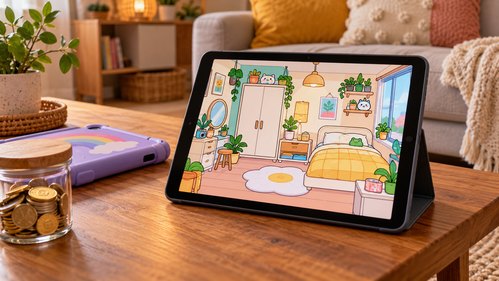
You do not need to become an expert player to set useful boundaries. Ask your child to show you a favorite room and explain which objects matter to their story. That gives you a concrete starting point for discussing gifts and spending. It also keeps the conversation connected to play instead of turning every request into an argument about money.
Sort Content by How It Is Obtained
Use three simple categories: content already available in your game, official gifts currently offered, and content shown for purchase. A video can mix all three in one scene. Ask which specific object the child wants, rather than treating the entire room as a single free download. Check the current game and official help information together.
Avoid promising that all past gifts will become available again. Availability can change, and an older creator's collection does not establish what a new player can claim today. You can acknowledge that an item looks appealing while explaining that your family will use the official options actually offered. That is clearer than searching endlessly for an unofficial unlock.
Choose a Purchase Rule Before the Next Request
Decide whether purchases are allowed, who approves them, and whether there is a budget or waiting period. Explain the rule in a sentence the child can repeat. For example, a family might agree to discuss a pack later rather than buy it during play. The right arrangement depends on your household, not on another player's collection.
Review the purchase controls provided by your device or app store and use the current official instructions for that platform. Do not assume a setting on one device automatically applies to every other device the child uses. Keep account credentials private, and avoid asking children to handle payment information simply because they are more familiar with the game's menus.
Turn a New Pack Request Into a Play Question
Ask what the child wants to do with the requested content. Is it a particular story, a new setting, or the excitement of having what a creator showed? A specific answer helps you decide whether existing items could support the same idea. You might try a small version of the story before deciding whether a purchase adds something useful.
This is not a test the child must pass to justify enjoying the game. It is a way to make the choice concrete. If a pack is eventually purchased, check its description and price carefully, and keep the receipt. Do not assume that a thumbnail includes every object shown in a promotional scene or that content transfers identically across platforms.
Make Shared Devices Less Confusing
When siblings share a device, agree on which rooms can be rearranged and which should be left alone. A simple agreement can prevent a moved object from being mistaken for a missing gift. Taking a screenshot of a favorite arrangement may help children remember how to rebuild it, but it is not a backup or a guarantee of restoration.
Before changing devices, deleting the app, or resetting a world, consult the official support information about saved content and purchases. These are different issues and may have different limitations. Explain the possible consequences in advance so that a routine device cleanup does not unexpectedly remove a child's carefully arranged play space.
Recognize an Unofficial Free-Content Offer
A page that promises every paid pack at no cost is not made trustworthy by using familiar Toca images. Be cautious of requests to install altered versions, disclose account details, or complete unrelated verification tasks. Use the official app and support channels to check an offer. Avoid experimenting with a device that holds personal information or valued game data.
If your child has already followed a questionable link, focus first on understanding what happened. Ask whether they downloaded anything, entered information, or made a payment, then use the relevant official device, store, or account support. A calm response makes it more likely they will tell you about future confusing offers rather than hide them.
Keep Free Play Enjoyable on Its Own
Try a short challenge using only items already in the world. Create a delivery story, rearrange a familiar room for a celebration, or give one object a new role. Let the child lead the story. The activity should feel like play, not a lesson designed to prove that wanting new content is wrong.
When an official gift is available, collect it through the supported route and decide together where it fits. If you miss a release, move on to another idea instead of making collection a daily obligation. Free play works best when it remains flexible and creative, with spending choices handled separately and consistently.
Use a Small Spending Example to Explain the Rule
A child can understand a purchase decision more easily when it relates to a specific play idea. Ask which scene the new content would enable and whether existing objects can support a simpler version. If the answer changes from one video to the next, keep a wish list for a few days before deciding. Waiting is a household choice, not a requirement of the game.
The example below uses a fictional monthly allowance of $10; these are not Toca Boca prices. A hypothetical $4 purchase would leave $6, while two such purchases would leave $2. Taxes or local store pricing could change an actual checkout amount. Review the displayed total together, and make clear that unused allowance does not have to be spent. The goal is an understandable boundary rather than a reward for collecting everything.
Use a Small Spending Example to Explain the Rule
Illustrative choice | Spent from $10 | Remaining |
|---|---|---|
Use existing content only | $0 | $10 |
One hypothetical $4 purchase | $4 | $6 |
Two hypothetical $4 purchases | $8 | $2 |
Frequently Asked Questions
Q1: Is everything shown in a Toca video free?
A1: No. A scene can combine gifts, existing content, and purchased packs. Check the specific item and the current official offering.
Q2: Do we need to buy packs to make stories?
A2: You can create stories with the content already available in your game. Additional purchases are a family choice, not a requirement to imitate every creator.
Q3: Can siblings safely rearrange the same world?
A3: Agree on shared spaces and protected arrangements first. A screenshot can help remember a layout but should not be treated as a saved-game backup.
Q4: What should we check before switching devices?
A4: Read the official guidance on purchases and saved content for the relevant platforms. Do not assume every item or arrangement will transfer automatically.
Keep the Rules Simple and Visible
Know what is free, decide who approves purchases, and check before changing game data. Those boundaries leave more room for the creative play that attracted your child in the first place.